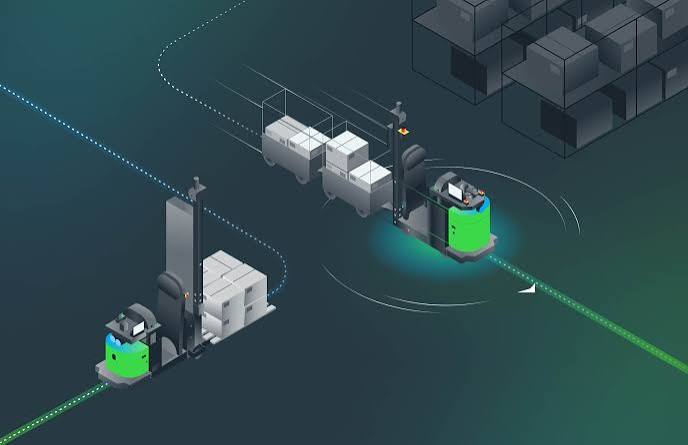
Warehouse Automation and ASRS System: The Complete Guide to Transforming Your Storage Operations

In today’s fast-paced logistics landscape, businesses across the globe are racing to keep up with rising customer expectations, shrinking delivery windows, and relentless pressure on margins. Warehouse automation has emerged as the definitive answer to these challenges, and at the heart of this revolution lies the ASRS system, or Automated Storage and Retrieval System. Whether you operate a sprawling distribution centre or a compact urban fulfilment hub, understanding how warehouse automation and an ASRS system can work together is essential for staying competitive. This comprehensive guide will walk you through the fundamentals, the benefits, the challenges, and the future trends shaping this transformative technology.
What Exactly Is Warehouse Automation?
Warehouse automation refers to the use of technology, machinery, and software to perform tasks that were traditionally carried out by human workers. These tasks include receiving, put-away, storage, picking, packing, and shipping. Warehouse automation encompasses a broad spectrum of solutions, from simple conveyor belts to sophisticated robotic arms and autonomous mobile robots. The goal is always the same: to increase speed, accuracy, and efficiency while reducing reliance on manual labour. In recent years, warehouse automation has become more accessible to businesses of all sizes, thanks to falling hardware costs and the rise of cloud-based management software.
Understanding the ASRS System
An ASRS system is a specific type of warehouse automation that uses computer-controlled systems to automatically store and retrieve items from defined storage locations. The ASRS system typically consists of a combination of hardware and software, including storage racks, robotic shuttles or cranes, conveyor systems, and a warehouse management system that orchestrates the entire operation. When an order comes in, the ASRS system identifies the required items, retrieves them from their storage locations, and delivers them to the picking station. This level of automation dramatically reduces the time and labour required for order fulfilment, making the ASRS system a cornerstone of modern warehouse automation.
The Core Components of an ASRS System
To fully appreciate how an ASRS system functions, it helps to understand its key components. The first is the storage structure, which may consist of vertical lifts, horizontal carousels, or high-density racking. The second is the retrieval mechanism, such as a robotic crane or shuttle, which moves along the aisles to access the stored items. The third is the control software, which communicates with the warehouse management system to coordinate movements and track inventory. The fourth is the conveyor or transfer system, which moves items from the storage area to the picking or shipping zone. Together, these components form an integrated ASRS system that can operate continuously with minimal human intervention.
How Warehouse Automation and ASRS System Work Together
Warehouse automation is a broad umbrella term, and the ASRS system is one of its most powerful tools. When integrated effectively, warehouse automation and an ASRS system create a seamless flow of goods from receiving to dispatch. For example, an automated conveyor system might transport incoming pallets to an ASRS system, which then stores them in the most efficient location based on size, weight, and turnover rate. When an order is placed, the ASRS system retrieves the required items and sends them via conveyor to a packing station. This level of coordination is only possible when warehouse automation is designed as a holistic solution rather than a collection of isolated machines.
The Benefits of Implementing Warehouse Automation
The advantages of warehouse automation are numerous and well-documented. First, it dramatically increases throughput, allowing businesses to process more orders in less time. Second, it improves accuracy, reducing the incidence of mis-picks and returns. Third, it reduces labour costs, as fewer workers are needed to perform repetitive tasks. Fourth, it enhances safety by removing humans from hazardous environments such as high racking or heavy machinery zones. Fifth, it optimises space utilisation, as an ASRS system can store items more densely than manual racking. Sixth, it provides real-time data visibility, enabling better decision-making and inventory control. These benefits explain why warehouse automation has become a strategic priority for businesses across industries.
The Specific Advantages of an ASRS System
While warehouse automation offers broad benefits, the ASRS system brings its own unique advantages. An ASRS system is particularly effective in environments where space is at a premium, as it can utilise vertical height that would otherwise be wasted. It is also ideal for operations with high SKU counts, as the system can manage thousands of unique items without confusion. Furthermore, an ASRS system improves ergonomics, as workers no longer need to bend, stretch, or climb to retrieve goods. The system also provides exceptional inventory accuracy, as every movement is tracked digitally. For businesses with cold storage or hazardous materials, an ASRS system can operate in conditions that would be unsafe for humans.